
There’s a version of this debate that plays out in a lot of people’s heads right around the time they’re deciding whether to spend $30 or $400 on a bag. One option sits in a trendy pop-up or scrolls through your Instagram feed looking effortlessly minimal. The other one lives behind glass at the mall, draped in monograms and decades of heritage. Both are bags. Both hold your stuff. So what’s actually the difference?
The Coach vs. Baggu comparison is less about luxury versus budget and more about what you believe a bag is — an investment piece with legacy craftsmanship, or a smart, sustainable everyday tool designed around how modern life actually works.
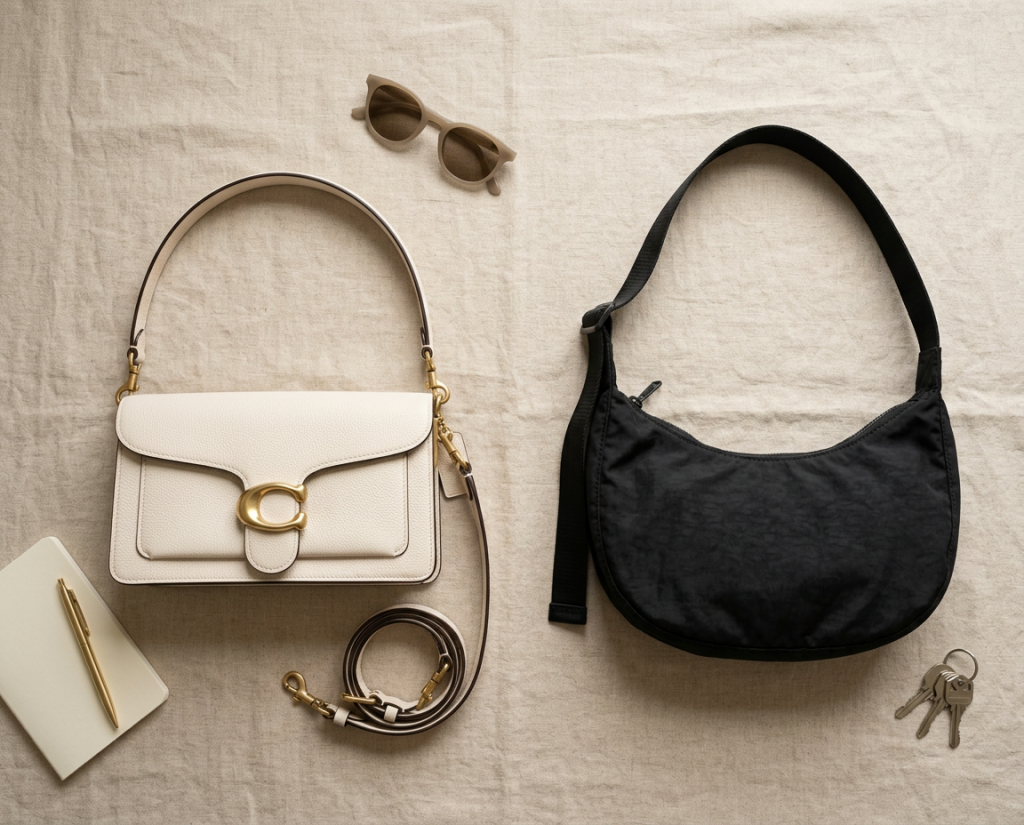
Quick Answer: Coach bags offer genuine leather construction, long-standing American heritage, and elevated materials that justify a higher price point for buyers prioritizing durability and prestige. Baggu bags are lightweight, thoughtfully designed, and sustainability-forward, offering exceptional everyday utility at a fraction of the cost. They serve fundamentally different needs and different carry philosophies.
At a glance:
- Coach excels in: Material quality, longevity, brand heritage, formal and professional settings
- Baggu excels in: Lightweight utility, sustainability, packability, everyday and casual carry
- Price range: Coach $150–$600+, Baggu $12–$150
- Best for: Coach = investment carry. Baggu = functional daily carry
- Material: Coach = primarily leather. Baggu = recycled nylon, canvas, ripstop
Coach vs. Baggu: The Core Comparison
| Category | Coach | Baggu |
|---|---|---|
| Price Range | $150–$600+ | $12–$150 |
| Primary Material | Full-grain & Pebble Leather | Recycled Nylon, Canvas |
| Weight | Heavier (leather construction) | Very lightweight |
| Sustainability Focus | Some leather alternatives, traditional production | Core brand value, recycled materials |
| Packability | Low — holds its structure | High — folds flat, packs easily |
| Durability (Long-term) | Very high with care | High for daily casual use |
| Style Category | Heritage, preppy, elevated casual | Minimalist, utilitarian, streetwear-adjacent |
| Ease of Cleaning | Requires leather care | Machine washable (most styles) |
| Best Use Case | Work, events, travel, investment | Daily errands, travel, minimalist carry |
| Brand Identity | Legacy American luxury | Modern sustainable uftility |
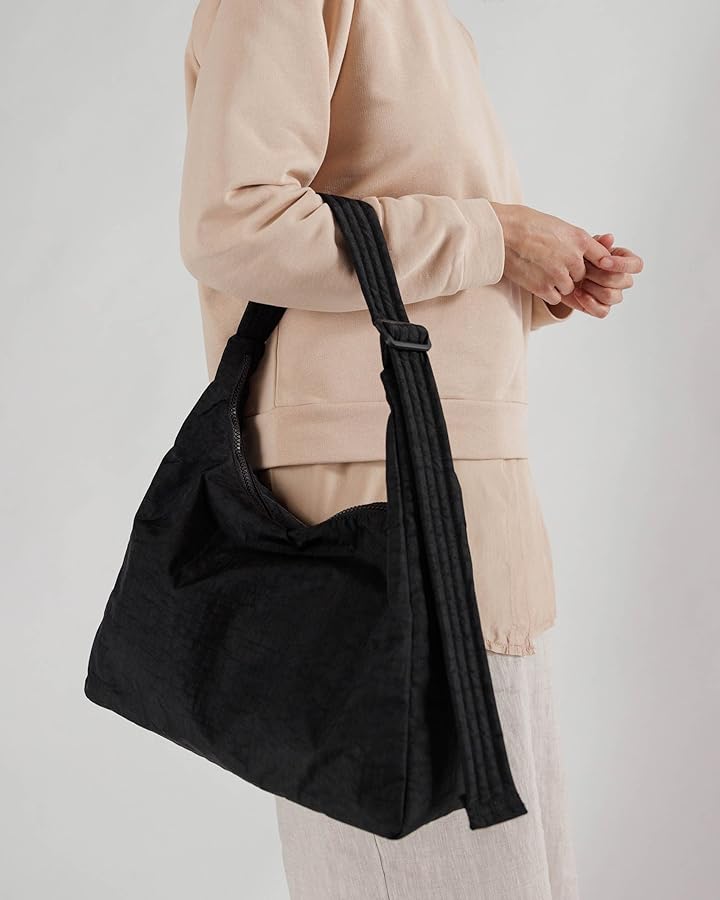
The Material Question: Where the Price Gap Actually Lives
This is the honest starting point. Most of the $350+ price difference between a mid-range Baggu tote and a comparable Coach bag isn’t markup for the sake of it — it’s leather.
Coach uses primarily full-grain and pebble leather, which is genuinely more expensive to source, cut, and finish. Full-grain leather, in particular, develops a patina over time. It scratches, then settles. It absorbs the oils and wear patterns of its owner. After five years, a well-maintained Coach bag looks like your bag in a way that a nylon tote simply doesn’t. That’s not marketing copy — that’s just the nature of the material.
Baggu works almost entirely in recycled nylon, canvas, and more recently, recycled ripstop. These materials have real advantages: they’re extraordinarily light, they compress down to almost nothing, and many Baggu styles are machine washable, which is quietly one of the most underrated bag features in existence. But they don’t age the same way leather does. They don’t develop character through use — they eventually just wear out.
The nuanced take here is that “wears out” doesn’t mean poor quality. A Baggu Standard Bag has been stress-tested to hold up to 50 pounds despite weighing almost nothing when empty. The craftsmanship is real — it’s just suited to a different kind of longevity.
The honest trade-off: Coach leather rewards long-term owners who take care of their things. Baggu nylon rewards people who need a bag that works right now, today, in the rain, in a backpack, without a second thought.
Construction and Craftsmanship: Looking Closer
Coach’s Construction Heritage
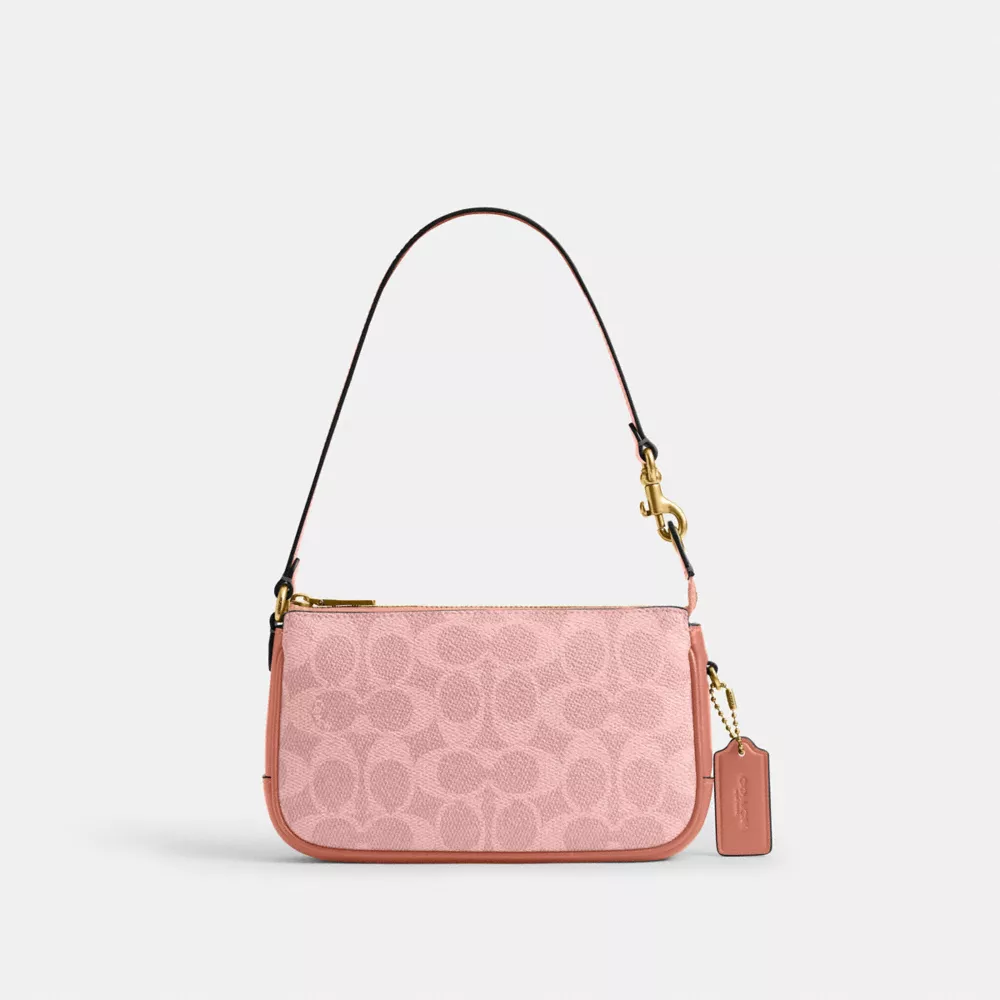
Coach was founded in 1941 with a specific focus on leather craftsmanship, and while the brand has evolved significantly since then — expanding into diffusion lines, collaborations, and accessible price points — their core construction approach in the main line bags is still solid.
Stitching on Coach leather bags tends to be tight, evenly spaced, and reinforced at stress points. Hardware quality varies by line: the higher-end bags use brass or brushed metal that resists tarnishing, while some entry-level styles use lighter zinc alloys that can wear over time. Interior linings are generally fabric-based (often the signature monogram canvas) and can show wear before the exterior does — something worth noting if you’re rough on bag interiors.
The structural integrity is high. Coach bags are designed to hold their shape. This is great for carrying formal or semi-formal contexts, less ideal when you need to stuff a bag into an overhead bin.
Baggu’s Functional Engineering
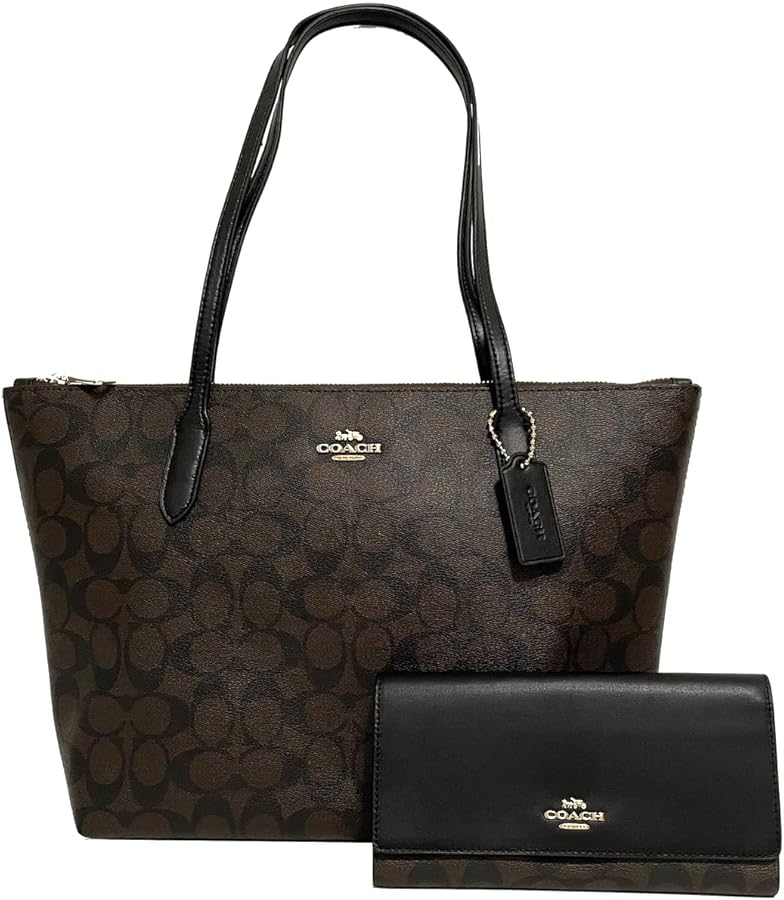
Baggu’s design ethos is almost the inverse. The brand started with a simple reusable shopping bag in 2007 and has built its identity around the idea that bags should function as tools, not status objects. The engineering reflects that.
The standard reusable bags are deceptively simple — one continuous piece of ripstop nylon with reinforced seams that distributes weight across the entire bag rather than concentrating it at handle attachment points, which is usually where cheap bags fail first. The duck bags and travel totes add structural elements — padded straps, zipper closures, interior organization — without adding unnecessary weight.
What’s impressive about Baggu construction isn’t complexity; it’s restraint. Every element that exists on the bag exists for a reason. That minimalism extends the useful life of the product by eliminating potential failure points.
The Carry Culture Dimension: What Does Your Bag Say?
[IMAGE: Street-style photo showing a person in casual-minimalist clothing carrying a Baggu crossbody alongside another person carrying a Coach leather tote]
This is where the comparison gets interesting beyond specs and materials.
Baggu has an aesthetic identity that resonates strongly with the current streetwear-meets-minimalism moment. The brand’s color drops are culturally aware — their seasonal palettes feel genuinely considered rather than algorithmically safe. Carrying a Baggu signals something: that you care about what things are made of, that you don’t need logos to communicate taste, that you’ve thought about the weight of your carry stack.
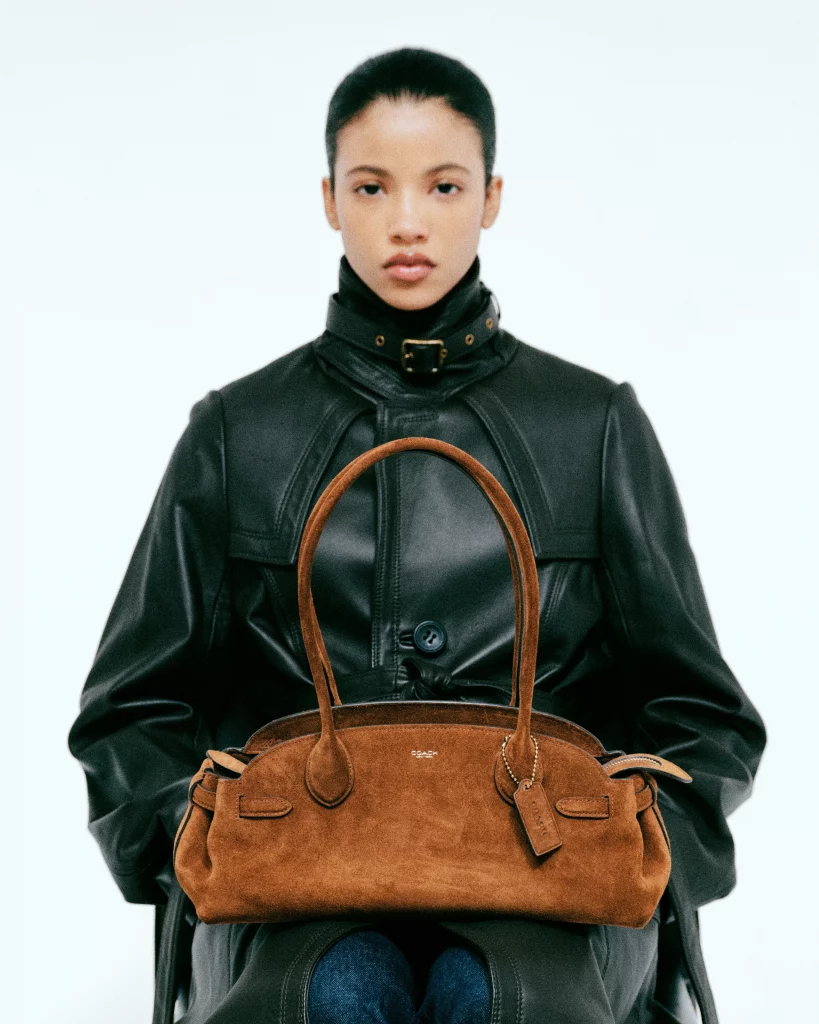
Coach occupies a different cultural space. It’s been repositioned significantly over the last decade — the brand went from being associated with outlet malls and aggressive monogramming to a more intentional, fashion-adjacent identity under creative direction changes. The Tabby bag, in particular, became a genuine fashion moment. Coach has earned a spot in the intersection of heritage and contemporary style, but it still carries (fairly or not) some of the weight of its mid-2000s cultural associations.
Neither read is wrong. They’re just different carry identities. And honestly, a lot of people own both — a Coach leather bag for more formal or intentional moments, and a Baggu for the days when they need a bag that disappears into the day.
The Sustainability Consideration
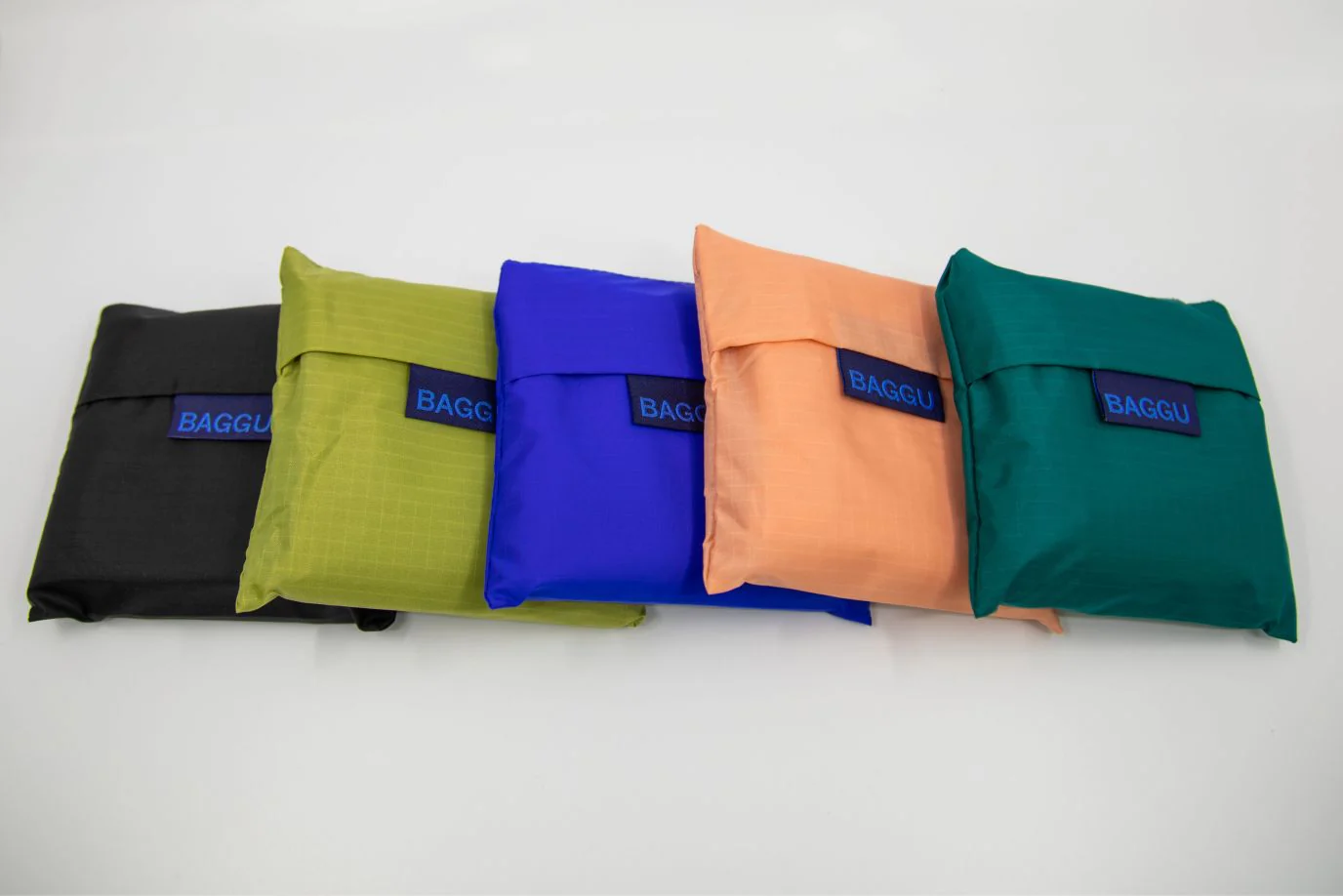
Baggu is genuinely committed to sustainability in a way that goes beyond marketing language. Their recycled nylon is made from pre-consumer textile waste, their packaging is minimal and recyclable, and the brand regularly publishes transparency reports about their production practices. For buyers who prioritize environmental impact, Baggu is an easy recommendation.
Coach has made sustainability commitments, including their Coachtopia sub-line, which uses recycled and regenerative materials. But leather production as a category carries a significant environmental footprint that’s difficult to offset entirely, and Coach’s main line is still primarily traditional leather goods.
This isn’t a disqualifier for Coach — leather durability, when a bag genuinely lasts decades, can be more sustainable than replacing cheap bags every few years. But if sustainability is a primary purchase criteria, Baggu is the clearer choice.
Introducing the Carry Value Index: A Framework for Comparing Bags Across Price Points
One of the persistent problems with bag comparisons is that price and quality get conflated. A $400 bag isn’t automatically better than a $40 bag — better for what, used how often, carrying what, going where?
The Carry Value Index (CVI) is a simple framework for evaluating whether a bag’s price makes sense for your actual carry needs. Score each of the following five factors from 1–5 based on your specific use case:
1. Use Frequency (1 = rarely use / 5 = daily carry)
2. Context Alignment (1 = bag doesn’t match most of your use cases / 5 = perfect fit for your lifestyle)
3. Material Longevity Payoff (1 = material quality won’t matter in my use case / 5 = I’ll use this for 5+ years)
4. Sustainability Priority (1 = not a factor / 5 = core purchasing criterion)
5. Carry Simplicity Needed (1 = I want structure and formality / 5 = I need lightweight and packable)
Reading Your Score:
- 20–25: Baggu is the smarter buy. You need frequent, lightweight, sustainable, low-friction carry.
- 13–19: Either brand could work depending on which specific factors scored highest. Consider your highest-scoring categories.
- 5–12: Coach is worth the investment. You’re buying for longevity, formality, and material quality.
This framework won’t make the decision for you, but it forces the right questions — specifically, it separates “I want this bag” from “this bag is right for how I actually carry things.”
Real-World Scenarios: Which Bag Actually Works?
Daily Urban Commute
Winner: Baggu. Weight matters when you’re carrying a bag for 8+ hours. The ability to machine-wash a bag that sits on coffee shop chairs and subway floors is genuinely valuable. A Coach leather bag in this context would require more careful maintenance than most commuters want to deal with.
Weekend Travel / One-Bag Trip
Winner: Baggu (especially the Cloud Bag or Travel Tote). Packability, light weight, and durability under compression are exactly what weekend travel demands.
Professional Setting / Client-Facing Work
Winner: Coach. There are still contexts where the material and silhouette of a leather bag communicates something. It’s not about status — it’s about signal alignment. In some professional environments, a polished leather bag is appropriate in a way a nylon tote isn’t.
Outdoor Market / Farmers Market / Casual Errands
Winner: Baggu. This is genuinely Baggu’s home territory. A canvas tote or standard bag that holds a week’s worth of groceries and costs $15 is one of the best value propositions in carry.
Long-Haul Travel
Split. Carry-on bag: Baggu’s lightweight packability wins. But a Coach crossbody for passport, phone, and essentials offers structure and security that a soft nylon bag doesn’t.
The Price-Per-Use Calculation
Here’s a framing that cuts through the sticker shock on both sides:
A Coach leather bag at $350 used 5 days a week for 5 years = roughly $0.27 per use.
A Baggu standard tote at $15 used 3 days a week for 2 years = roughly $0.05 per use.
Both are excellent value. The question is whether you’re buying for enduring quality or immediate affordability — and whether your lifestyle actually supports the long-term maintenance a leather bag requires.
What Gets Overlooked in This Comparison
1. The organizational difference is significant. Most Coach bags have structured interiors with dedicated pockets and slip slots. Most Baggu bags are open cavities. If you’re someone who loses things in bags, Coach’s interior architecture is genuinely helpful. This isn’t discussed enough in quality comparisons.
2. Baggu’s limited edition drops have secondary market value. Baggu collaborates with brands and designers (New Balance, Hello Kitty, Olivia Rodrigo, among others) and their limited colorways regularly sell out and appear on resale markets at markup. For carry culture enthusiasts who track drops, Baggu behaves more like a collector item than a utility purchase.
3. Coach’s entry price point is more accessible than many realize. The Outlet and Coach (Re)Loved lines offer significantly lower entry points, sometimes under $100. This changes the value calculus if you’re comparing a budget Coach outlet bag to a mid-tier Baggu.
FAQ
Is Coach better quality than Baggu?
In terms of materials and longevity, Coach’s leather bags use higher-cost materials that develop character over time and can last decades with care. Baggu uses high-quality recycled nylon designed for functional durability, not long-term patina. “Better” depends entirely on your use case — leather rewards careful, long-term owners; nylon rewards daily, low-maintenance carry.
Are Baggu bags worth the price?
Yes, for most everyday use cases. Baggu bags are thoughtfully engineered for utility at accessible price points. The standard reusable bags in particular offer extraordinary load capacity for their weight and cost. The premium duck bag and cloud bag lines are genuinely competitive with bags costing two to three times more.
Do Baggu bags last a long time?
With reasonable use, Baggu bags last several years. The nylon styles are particularly durable for everyday casual carry. They won’t develop a patina the way leather does, but the construction is solid and the machine-washable factor extends their useful life significantly.
Is Coach still considered a luxury brand?
Coach sits in the “accessible luxury” or “affordable luxury” category — above mass-market brands like Fossil or Kate Spade but below true luxury houses like Gucci or Louis Vuitton. Their leather quality is genuine, their heritage is real, and the brand has been successfully repositioned as a credible fashion label in recent years.
Can you use a Baggu bag professionally?
Baggu’s duck bag and cloud bag styles can work in casual professional environments, creative industries, and informal workplaces. For more formal corporate or client-facing settings, the styling of most Baggu bags tends to read as casual rather than professional. Context matters.
Which bag is better for travel — Coach or Baggu?
For most modern travel scenarios, Baggu wins on practicality: lighter, more packable, washable, and versatile. Coach leather bags are better suited as carry complements — a structured crossbody for documents and valuables while Baggu handles overflow and packing.
Are Baggu bags sustainable?
Baggu has a genuine and documented sustainability commitment, using recycled pre-consumer textile waste for their nylon products and maintaining transparent production reporting. It’s one of the more credible sustainability stories in accessible bag brands.
What’s the best Baggu bag for everyday carry?
The Baggu Cloud Bag and the Duck Bag (medium) are the most versatile for daily use. The Standard Bag is the best value. If you’re comparing to Coach functionality, the Cloud Bag’s zippered closure and organized interior is the closest equivalent to a structured everyday bag.
The Bottom Line
The Coach vs. Baggu comparison isn’t really a contest — it’s a question of what role the bag is playing in your carry system. Coach leather is a considered investment for buyers who want material quality that improves with age, who need bags that perform in professional and elevated casual contexts, and who treat bags as long-term companions. Baggu is a precision tool: lightweight, sustainable, honest about what it is, and excellent at the daily work of holding your things without asking much in return.
The most thoughtful carry setups often include something from both ends of this spectrum. A structured leather piece for intentional use, a lightweight nylon option for everything else. That’s not indecision — that’s knowing what each bag is actually for.
When building your carry stack, start with use case and frequency before you look at price. The Carry Value Index above can help clarify that thinking. Because the right bag isn’t the most expensive one or the most sustainable one or the most aesthetically interesting one — it’s the one that fits how you actually move through the world.